Technology & Services

inner-banner

Core Technologies

Built on Precision, Integrated by Process

At ELPHA Formwork, core technology is not limited to one machine or one production step. It is the integration of all key stages of aluminum formwork manufacturing — from alloy preparation and extrusion to system design, automated fabrication, quality control, and project delivery. This is what allows us to maintain consistency, shorten lead times, and support large-scale projects with stable quality.


Our technology platform is built around five core strengths:integrated aluminum processing, advanced extrusion capability, system design and engineering, automated production, and standardized quality control.
Integrated Aluminum Processing

Integrated Aluminum Processing

ELPHA Formwork runs a fully integrated production model linking scrap aluminum, billet prep, extrusion, machining, fabrication, assembly, and delivery within one controlled system. By keeping processes in-house rather than across multiple suppliers, ELPHA Formwork strengthens material consistency, production coordination, and on-time delivery. The integrated chain also cuts waste, boosts repeatability, and stabilizes costs, supporting reliable long-term supply.

xascs (1)

High-Capacity Extrusion Technology

High-Capacity Extrusion Technology

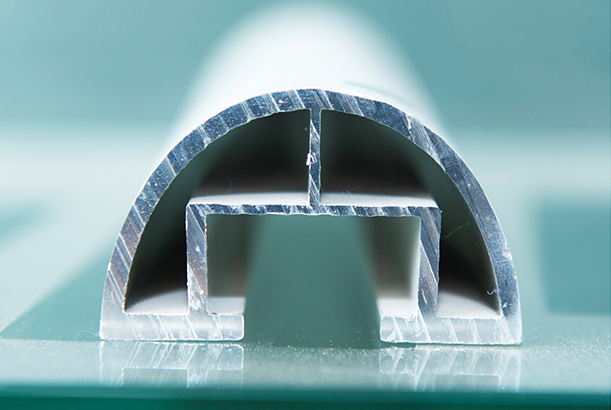
Extrusion is core to aluminum formwork performance. ELPHA Formwork operates high-capacity presses producing profiles up to 600 mm wide, covering both standard and project-specific sections. A large mold base and strong throughput enable a broad portfolio of profiles for panels, beams, and structural accessories. This integrated capability delivers precise sections, stable mechanical properties, and large-scale output within one manufacturing system.

xascsc

System Design and Engineering

System Design and Engineering

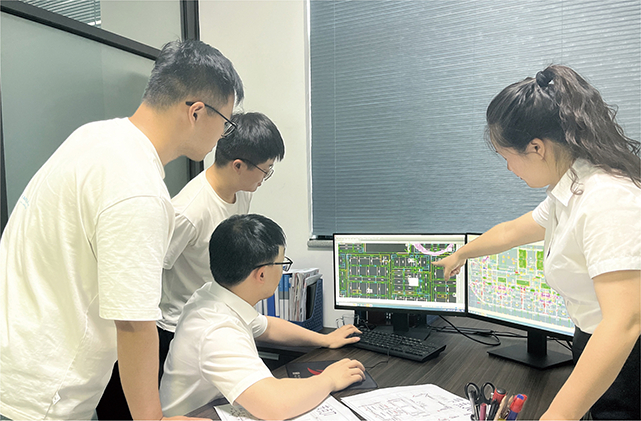
Strong engineering underpins ELPHA Formwork's products. Our team supports the full design cycle, from project intake to production drawings. Using customer structural data and site requirements, we deliver shell/layout/modulation/framework drawings, BOQ, and fabrication details ready for manufacturing. We prioritize manufacturability, site efficiency, and system coordination. By tightly aligning design with factory capabilities, we cut errors, raise standardization, and streamline production and installation.

xAXCSA

Large Mold Library and Flexible Development

Large Mold Library and Flexible Development

ELPHA Formwork's 5,000+ mold base enables high flexibility for ODM/OEM. Existing molds speed development and move fast-track projects into production. For custom needs, we design and build new molds from customer drawings and system requirements. This mix of extensive ready molds and agile development lets ELPHA Formwork deliver both standard and customized products quickly and efficiently, maintaining production throughput and quality.

cscsd

Automated Production Technology

Automated Production Technology

Automation underpins ELPHA's Formwork manufacturing. Over 40 automated lines boost throughput, dimensional consistency, and labor efficiency while cutting manual error in repetitive steps. Digital integration links engineering data directly to production, improving traceability and coordination. In aluminum formwork, where precision, repeatability, and lot-to-lot consistency determine installation quality and site performance, this automation delivers tighter tolerances, stable output, and reliable schedules.

dwaqd

Precision Fabrication and Assembly

Precision Fabrication and Assembly

After extrusion and cutting, ELPHA Formwork routes formwork components through controlled fabrication and assembly. We verify profile accuracy, hole positions, connection details, and panel structures to match design intent exactly. Process discipline and in-line checks ensure parts are consistent, correctly matched, and project-ready. This tight fabrication control improves panel fit, minimizes site rework, shortens installation time, and enhances jobsite performance.

DWQA

Standardized Quality Control

Standardized Quality Control

Technology creates value only when consistently controlled. ELPHA Formwork applies standardized checks at every stage—from raw material control and profile inspection to finished panel verification and packing review. Linked stages provide rapid feedback and early issue detection, preventing defects from reaching shipment. This closed-loop QC ensures dimensional consistency, structural reliability, and delivery readiness, helping customers cut rework and improve project execution.

xsawxdsaw (1)

Engineering-to-Production Coordination

Engineering-to-Production Coordination

ELPHA Formwork's core strength is tight engineering-manufacturing coordination. Few factories link design logic to production logic; ELPHA Formwork does, aligning design, mold readiness, production planning, fabrication, packing, and dispatch in a single structured workflow. This end-to-end integration improves lead-time control, reduces communication loss, and gives customers a clear, predictable path from approved drawings to delivered goods.

DQAWF

Tailored Formwork Solutions, Built for Real Project Needs

At ELPHA Formwork, customization is not treated as an add-on. It is a core part of how we support different project structures, technical standards, and construction requirements across global markets. From customer samples and technical drawings to project-specific optimization and digital 3D design, our team provides flexible and practical solutions that connect engineering with manufacturing.


Backed by strong production capacity and an experienced engineering team, ELPHA Formwork helps customers move from concept to production with better accuracy, faster coordination, and more reliable execution.

  • Sample-Based Customization

    Precise Reproduction from Physical Reference

    ELPHA Formwork turns customer-supplied samples, prototypes, or sections into production-ready aluminum formwork or extrusions. Our engineers analyze dimensions and structure, assess manufacturability, and create matching solutions. Ideal for replicating products, aligning with installed systems, or rebuilding components without starting from scratch.

    sxcs
  • Drawing-Based Customization

    Turning Technical Drawings into Production

    ELPHA Formwork customizes aluminum extrusions, formwork, and accessories from customer drawings, reviewing feasibility and defining engineering and manufacturing routes to ensure strict design control, proprietary sections, and project-specific requirements are accurately translated into production.

    _DSC5510 -
  • On-Demand Customization

    Flexible Development for Project-Specific Requirements

    ELPHA Formwork delivers on-demand customization for unique layouts, local practices, and specific functional needs. Our engineers tailor solutions to project scope, optimizing for schedule, manufacturability, and site conditions. This approach boosts flexibility while keeping the process controlled and production-ready.

    service1
  • Light Customization

    Faster Adjustment Based on Existing Resources

    ELPHA Formwork offers light customization using existing molds, standard sections, and proven components, minimizing front-end development while enabling targeted modifications. It delivers a practical, cost-controlled solution with shorter lead times and limited changes to established systems, ideal for projects seeking a balance between customization and speed.

    2542cda1-6e0a-4770-9ffb-df4d9dbd31b3
  • Advanced 3D Design Capability

    Digital Design for Better Accuracy and Coordination

    ELPHA Formwork leverages advanced 3D design to enhance accuracy, cut coordination errors, and streamline execution—from layout planning to detailed breakdown. Capabilities include modeling/visualization, component-based coordination, virtual assembly checks, clearer installation guidance, and improved traceability, creating tighter links between engineering, manufacturing, and site teams while reducing conflicts and boosting communication.

    service2

OEM Manufacturing

OEM is for customers who already have their own product design, section drawings, or system requirements. Clients can send ELPHA Formwork drawings for custom extrusions, formwork panels, complete formwork systems, or steel accessories, and we will develop the required molds and manufacture according to the approved design. This model is suitable for customers who need stronger customization, proprietary sections, or tighter control over product design.


For OEM projects involving new molds, extra lead time is required before standard production can begin. Depending on the complexity of the section and testing requirements, new mold design, turnover, and validation usually take around 1 to 3 months. After that, the regular project workflow moves into drawing finalization, production planning, manufacturing, packing, and dispatch.

ODM Manufacturing

ODM is for customers who need a faster and more practical route. Instead of starting from a completely new design, customers can choose from ELPHA Formwork's existing extrusion range, formwork components, and mold library, or let our engineering team develop the system based on project drawings using available production resources. This shortens development time and reduces the waiting period caused by new mold preparation.


ODM is usually the better choice when project schedules are tight, when customers want to reduce front-end development time, or when a proven and production-ready solution is preferred. The engineering process is still structured, but because it is based on existing molds and sections, the project can move faster into production.

Standard Project Process

Stage Duration
Shell drawing 3 days
Shell plan approval 15 days
Modulation/shop drawing/framework drawing 15 days
BOQ 2 days
Holing pattern 3 days
Production planning 1–2 days
Production 12–14 days
Packing 3 days
Dispatch 3 days
Standard total 57-60 days
Additional time for new OEM mold development 1-3 months
  • article-2-1

    Flexible Manufacturing Path

    If a customer wants OEM customization but cannot wait for new mold development, ELPHA Formwork can also offer a hybrid route by using existing molds and available sections where possible, while customizing only the necessary parts. This helps shorten the schedule while still keeping part of the system tailored to the customer's requirements.

  • article-2-2

    Capacity Behind the Process

    ELPHA Formwork's OEM and ODM services are supported by large-scale manufacturing: two factories covering 1,100 Chinese acres, over 5,000 molds, 40+ automated production lines, 600 mm-wide extrusion capability, and a team of 80+ engineers. With an annual capacity of 6 million m² of aluminum formwork and 200,000 tons of aluminum extrusions, we provide customers with robust engineering support and production scale for efficient design-to-delivery execution.

Crushing Process Overview

Aluminum formwork scrap from construction sites and recycled aluminum materials are evenly fed onto the loading apron conveyor. The materials are transported into the crusher for size reduction.After crushing, the mixed material (aluminum, iron, and dust) passes through a magnetic drum at the end of the conveyor, where ferrous materials and aluminum-attached iron are separated. The aluminum-attached iron is further processed by a secondary hammer crusher to separate aluminum from iron.


After iron removal, the material enters a rotary screening drum. Particles smaller than 6 mm (dust and fine aluminum) are screened out and then separated by an air separator and an eddy current separator.Materials larger than 6 mm (aluminum blocks and impurities) are further processed by an eddy current separator. By adjusting belt speed, eddy current frequency, and splitter position, aluminum is effectively separated from impurities. The cleaned aluminum is then weighed and stored in designated areas for subsequent processing.

  • a1 1

    Aluminum Scrap Recycling

    Recovered aluminum materials are collected and prepared for remelting.

  • a2 2

    Primary Smelting

    Recycled aluminum is melted under controlled conditions to ensure chemical consistency.

  • a3 3

    Billet Casting

    Molten aluminum is cast into solid billets with precise dimensional control.

  • a4 4

    Billet Handling & Transfer

    Finished billets are transferred to the extrusion line for downstream processing.

  • a5 5

    Extrusion Workshop Setup

    Automated extrusion lines are prepared for continuous, high-capacity production.

  • a6 6

    Billet Preheating

    Aluminum billets are uniformly heated to optimal extrusion temperature.

  • a7 7

    Extrusion Preparation

    Billets are positioned and aligned for stable, high-pressure extrusion.

  • a8 8

    Profile Extrusion

    Heated billets are extruded through precision dies to form required profiles.

  • a9 9

    Initial Cooling

    Extruded profiles are rapidly cooled to stabilize shape and dimensions.

  • a10 10

    Profile Alignment & Straightening

    Profiles are mechanically aligned to eliminate distortion and internal stress.

  • a11 11

    Cutting To Length

    Profiles are cut to specified lengths with tight tolerance control.

  • a12 12

    Precision Shaping & Machining

    Secondary forming and machining ensure dimensional accuracy and interface fit.

  • a13 13

    Artificial Aging (Heat Treatment)

    Profiles undergo controlled aging to achieve the required mechanical properties.

  • a14 14

    Final Inspection & Packaging

    Finished products are inspected, bundled, and packaged for protection.

  • a15 15

    Finished Goods Warehousing

    Profiles are stored in an organized inventory for efficient order fulfillment.

  • a16 16

    Loading & Global Dispatch

    Packaged products are loaded and shipped for domestic and international delivery.

Aluminum Formwork Production Process (Summary)

Aluminum formwork is manufactured using dedicated aluminum profiles such as flat panels, C-channels, and angle sections. Based on shop drawings, production lists, and technical instructions, production is carried out through both automatic and manual lines.


The process sequence includes cutting, punching/milling, welding, straightening/grinding/shot blasting, and coating to produce formwork of the required specifications and quantities.


The finished components are then transferred to the assembly stage, where sorting, drilling, accessory installation, stacking, and packaging are performed according to packing lists before delivery to construction sites.

  • 1.Cutting

    Cutting

    Profiles are cut to required lengths per production drawings, with first-piece and in-production batch inspections, then sorted and transferred to the next process.

  • 2.Milling

    Milling

    Holes and slots are processed according to drawings. Positioning accuracy is strictly controlled, with first-piece and sampling inspections to ensure quality.

  • Welding

    Welding

    Components are assembled and welded as per design requirements. Weld seams must be uniform, firm, and free from defects to ensure structural integrity.

  • 4. Shape Correction

    Straightening & Surface Treatment

    Deformed parts are corrected to meet flatness requirements. Surface treatment (texturing or shot blasting) is applied to achieve uniform roughness and improve coating adhesion.

  • 5 Coating

    Coating (Powder Coating)

    Powder coating is applied (single-side or double-side as required). Coating thickness and adhesion must meet specified standards to ensure durability and corrosion resistance.

  • 6 Packing

    Assembly & Packaging

    Finished components are sorted, drilled (if required), and assembled with accessories. Products are then stacked, labeled, and packaged according to packing lists before delivery to site.

Quality Inspection Process And Illustrations

  • quality-1

    Raw Material Inspection

    • Key Inspection Items:Spectrometric analysis of the chemical composition of aluminum billets.
    • Inspection Standards:Compliant with GB/T 3190-2020 and corresponding alloy grade requirements
  • cxsac

    In-Process Inspection

    • Key Inspection Items:Online dimensional monitoring during extrusion; aging furnace temperature curve monitoring.
    • Inspection Standards:Dimensional tolerances controlled in accordance with drawing specifications.
  • csazxc

    Final Product Inspection

    • Key Inspection Items:Dimensional accuracy inspection; hardness testing; surface quality inspection.
    • Inspection Standards:Compliant with GB/T 6892-2023 requirements.
  • xsa

    Packaging & Outbound Verification

    • Key Inspection Items:Product specification verification; quantity check.
    • Inspection Standards:Clear and traceable labeling; adequate packaging protection to prevent transportation damage.