01 The comparison most buyers get wrong
Most buyers compare the wrong numbers.
They place an aluminum formwork quote alongside a plywood quote and conclude that aluminum is expensive. On day one, they are right — aluminum costs more upfront. But formwork is not bought by the panel; it is paid for by the pour. Divide the cost by reuse cycles and the comparison inverts.
02 The number that decides everything: reuse cycles
Film-faced plywood delivers a handful of pours before the edges swell, the faces delaminate and dimensional accuracy drifts out of tolerance. ELPHA aluminum formwork is engineered for 200+ reuse cycles.¹ That single gap is the entire economic argument — and it widens every time the structure repeats.
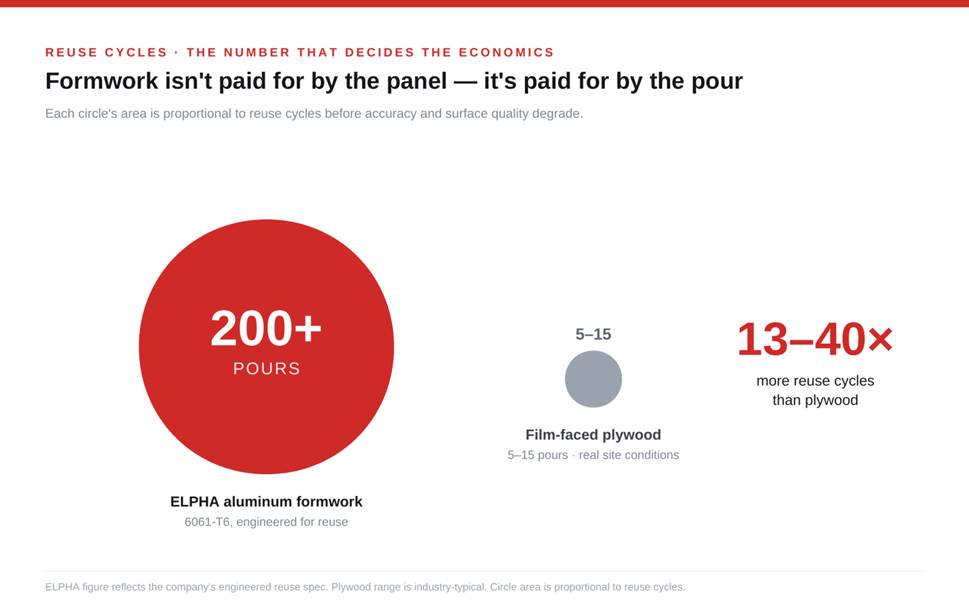
Figure 1 — Reuse cycles: film-faced plywood against ELPHA aluminum formwork.
(Sources: ELPHA internal engineering specifications and project records, 2026; Doka, Formwork Sheets User Information, 2021)
*Actual reuse cycles depend on product grade, handling, maintenance and site conditions.

03 Cheap per sheet loses to cheap per pour
Plywood looks inexpensive per sheet, but it is a consumable. Over the course of a high-rise, you have to repurchase it many times. Aluminum behaves differently: it is a fixed asset amortized across 200+ pours, and it retains recoverable scrap value at the end of its service life. Run the formula above on your own project with your own quotes. The more your floors repeat, the more decisively aluminum wins.
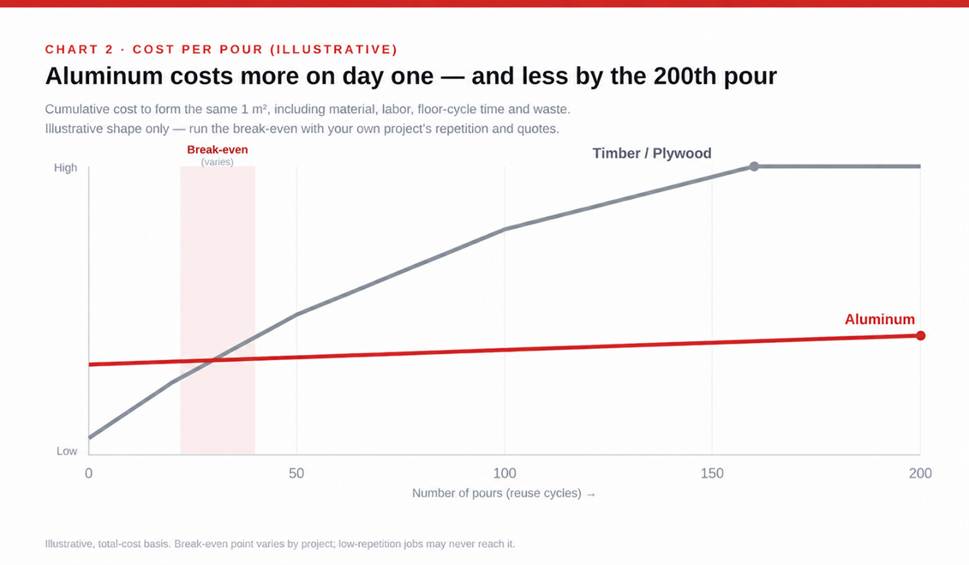
Figure 2 — Cost per pour: how the comparison inverts as reuse cycles accumulate.
(Sources:Published comparative analysis places the break-even point at approximately 25 reuse cycles against conventional formwork cost (Rivankar & Chordiya, 2017).
The exact point varies by project, and low-repetition structures may never reach it.)
04 Where the reuse economics are strongest
Aluminum formwork is built for the most industrialized part of construction: high-rise residential, repeated typical floors, and multi-tower developments running tight floor cycles. As buildings get taller and schedules tighten, the reuse economics widen aluminum’s lead. Timber and plywood retain a genuine niche in small, one-off or highly irregular structures — but on repetitive construction, they are the legacy method being phased out.
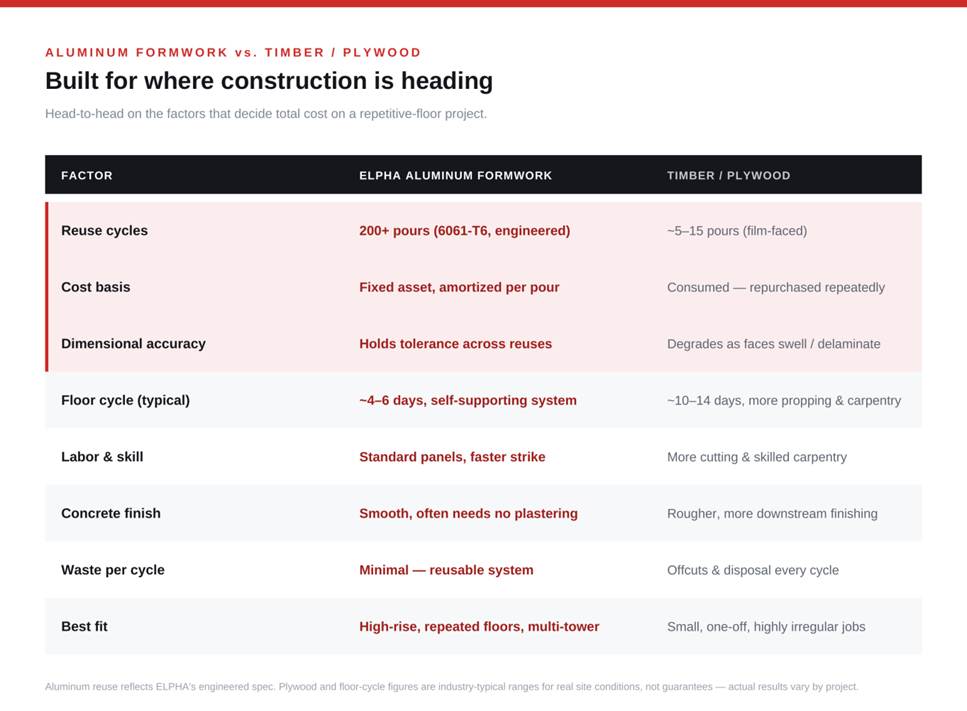
Figure 3 — Aluminum formwork compared with timber and plywood systems.
(Sources ELPHA figures are system design specifications; floor-cycle figures reflect ELPHA project experience on current high-rise projects.
Published studies of 10-day versus 21-day slab cycles (Rivankar & Chordiya, 2017); modern systems and planning have shortened both.)
Side-by-side summary
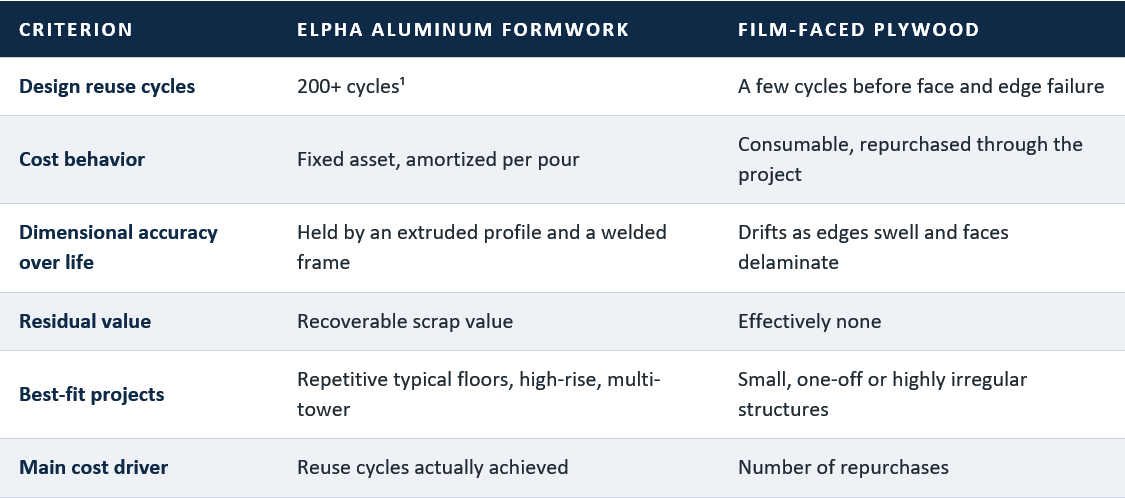
¹ Reuse cycles reflect system design under normal site handling, cleaning, storage and maintenance. Actual cycles vary with project conditions and site discipline.
05 Reusability is engineered, not assumed
The 200+ figure depends on what a cheap quote does not show: alloy and temper (6061-T6 for the right strength-to-weight ratio), extrusion profile quality and dimensional tolerance, weld integrity, surface coating, and mock-up assembly with QC before shipment. A panel with far fewer reuses is not cheaper — it is a hidden cost borne by the site.
This is why the manufacturer matters more than the quoted price, and why ELPHA runs the full chain in-house: extrusion, welding, coating and mock-up assembly under one roof, backed by the XMXYG supply chain.
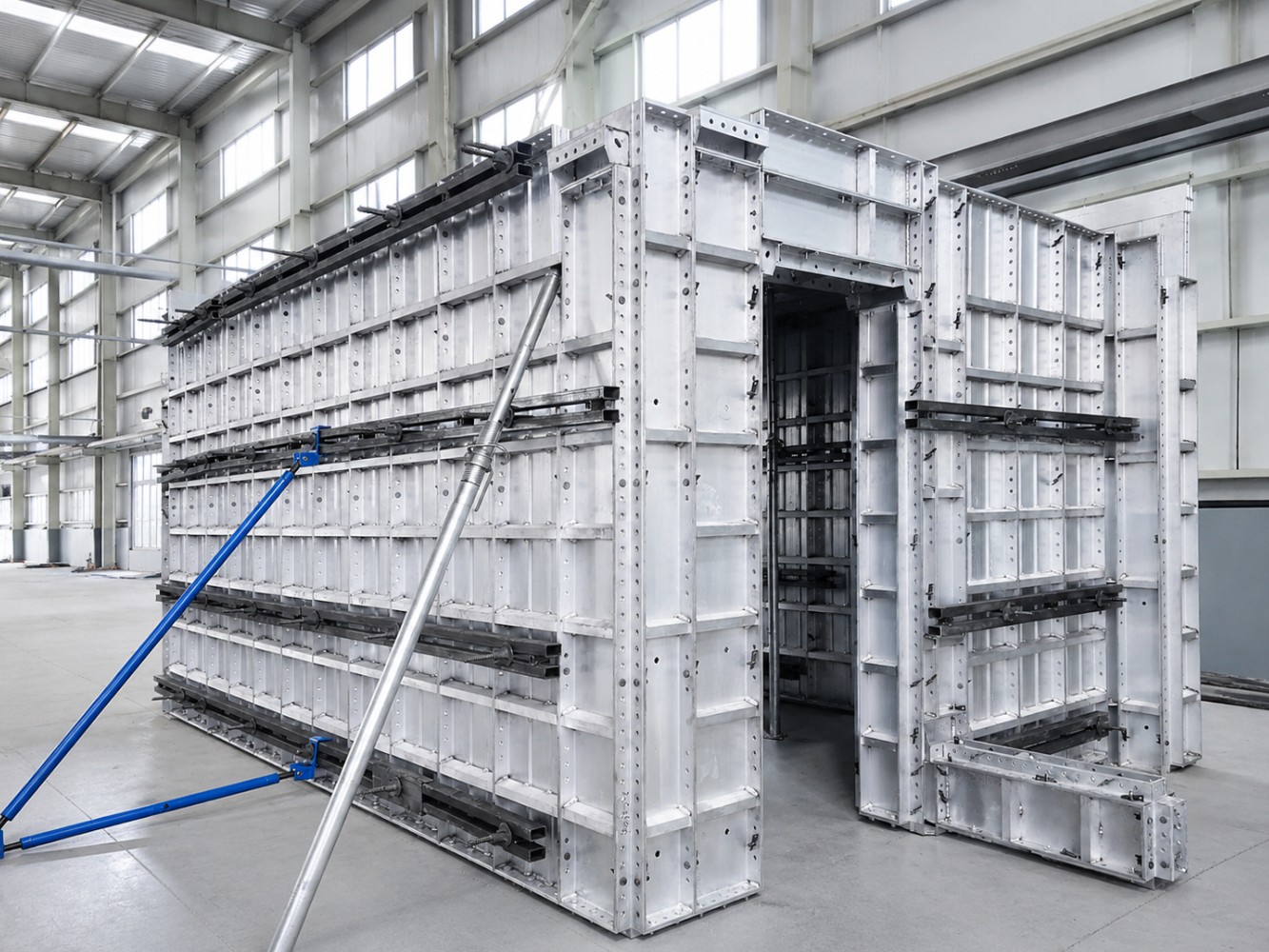
Figure 4 —ELPHA Full-chain manufacturing: extrusion, welding, coating and pre-shipment mock-up assembly.
06 Compare cost per pour, not quoted price
On a repetitive-floor project, aluminum at 200+ reuses wins clearly. Send us your floor count and a typical floor plate, and we will work through the cost-per-pour math for your specific case.
Next step
Planning an overseas project? Send your drawings and target timeline. We will come back with a system layout, a reuse plan, and a clear delivered-cost breakdown.

Sources and references
ASTM International. (2021). ASTM B221M-21: Standard Specification for Aluminum and Aluminum-Alloy Extruded Bars, Rods, Wire, Profiles, and Tubes.
Doka GmbH. (2025). Formwork Sheets: User Information—Instructions for Assembly and Use. Document No. 999792002, 07/2025. Amstetten, Austria.
The Aluminum Association. (2024). Aluminum Standards and Data 2024.
International Aluminium Institute. (n.d.). Quality & Value—The Aluminium Story.
Rivankar, H., & Chordiya, A. (2017). Aluminium Formwork Technology. International Journal of Advanced Research in Science, Engineering and Technology, 4(4), 3720–3726. ISSN 2350-0328.
Internal engineering specifications, quality-control records, verified project records, manufacturing documentation and factory photography. Unpublished company records.
