
Steel Pin–Wedge–Tie System in Aluminum Formwork: How ELPHA Formwork’s Connection Design Defines Safety, Reuse, and Concrete Quality
At ELPHA Formwork, long-term site data and engineering feedback show that steel pin–wedge–tie connections are the structural backbone of aluminum formwork performance. These components carry shear load, resist vibration, control spacing, and maintain alignment under fresh concrete pressure. When connection accessories fail, even the best panels cannot compensate.
Why ELPHA Formwork Uses Steel Pins and Steel Wedges
Connection points experience repeated hammering, vibration, and high localized stress. Based on industry benchmarks and site observations, steel consistently outperforms aluminum in these conditions.
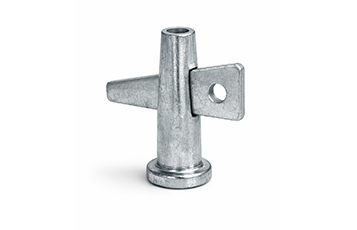
Key advantages of steel in formwork connections include:
- Higher yield strength and fatigue resistance
- Minimal deformation under repeated installation cycles
- Stable locking force under sustained vibration
- Longer reuse life with lower replacement frequency
Functional Role of Each Component in ELPHA Formwork
Steel Formwork Pin
The steel pin acts as the primary alignment and shear-transfer element between panels. Its straightness tolerance and diameter accuracy directly influence panel fit, load distribution, and resistance to vibration.
Bent or inconsistent pins create uneven load paths, leading to misalignment, leakage, and accelerated panel wear. ELPHA Formwork pins are subject to batch quality control to ensure consistent straightness and shear performance across large-scale projects.
Steel Formwork Wedge
The wedge provides the locking force that holds the aluminum formwork system together during pouring. Continuous vibration attempts to loosen connections; a properly designed steel wedge maintains clamping strength without surface wear or deformation.
ELPHA Formwork wedges are engineered to balance:
- High clamping force
- Controlled insertion resistance
- Reliable release during stripping
This balance improves both pour safety and dismantling efficiency.
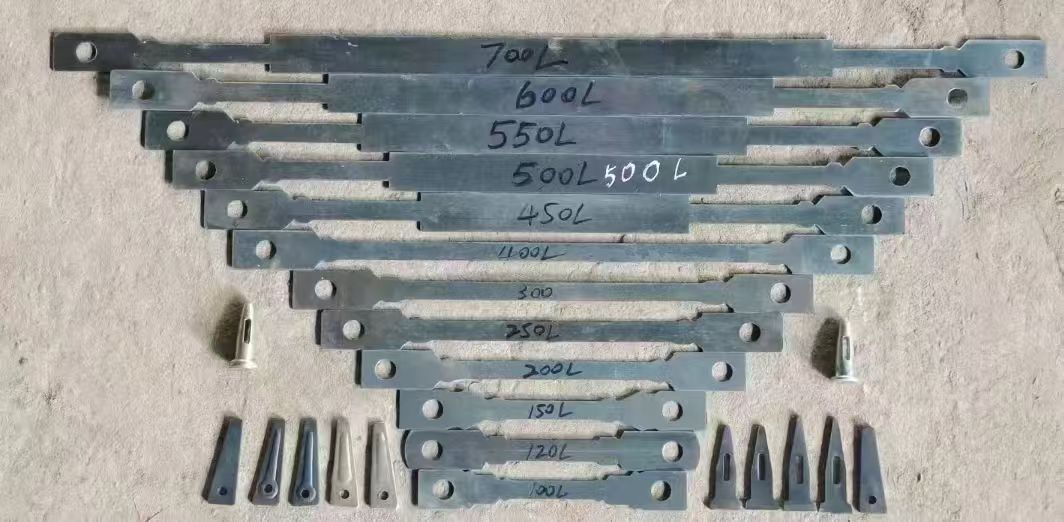
Formwork Tie
The tie defines wall thickness and resists lateral pressure from fresh concrete. Field measurements and industry data show that lateral pressure can exceed 50–70 kN/m², depending on pour height, speed, and mix design.
ELPHA Formwork ties are designed to:
- Maintain precise panel spacing
- Prevent bulging and leakage
- Protect concrete surface flatness
Why Connection Reliability Determines Project Outcomes
1.Structural Safety and Pour Stability
During concrete placement, aluminum formwork is subjected to pressure, vibration, and dynamic load. A fatigued wedge or deformed tie can loosen unexpectedly, increasing the risk of leakage or localized failure. Robust steel connections significantly reduce these risks and stabilize the entire pour process.
2.Reuse Rate and Lifecycle Cost Efficiency
High-quality steel pin–wedge–tie systems can achieve dozens of reuse cycles with minimal performance degradation. Lower-grade accessories often require early replacement, quietly increasing total project cost despite lower initial pricing.
ELPHA Formwork designs accessories for lifecycle value rather than single-project optimization.
3.Concrete Finish Quality
Stable, vibration-resistant connections keep panels aligned and rigid, reducing:
- Honeycombing
- Surface waviness
- Dimensional deviation
This results in flatter, cleaner concrete finishes and less downstream repair work.
FAQs
Q:Why are steel pins used instead of aluminum in formwork systems?
Steel provides higher strength, better fatigue resistance, and longer reuse life under repeated hammering and vibration.
Q:How many reuse cycles can steel pin–wedge systems achieve?
With proper inspection and maintenance, steel systems can achieve dozens of reuse cycles with stable performance.
Q:What causes formwork leakage during concrete pouring?
Common causes include loose wedges, deformed ties, or misaligned pins that allow panel movement under pressure.
Q:How do connection systems affect concrete surface quality?
Stable connections keep panels aligned and rigid, reducing honeycombing, waviness, and dimensional deviation.
Q:Are steel pin–wedge–tie systems compatible across different formwork systems?
Many systems use standard hole spacing, but compatibility should always be confirmed at the system level.