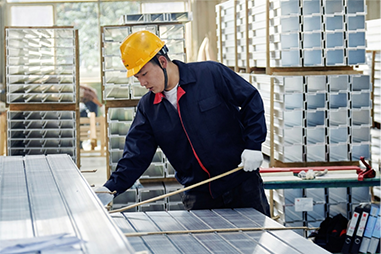
The tie-rod aluminum formwork system is a classic and widely used aluminum formwork reinforcement solution. It uses tie rods and walers as the primary load-bearing components, combined with aluminum panels, walers, plastic sleeves, nuts, and washers. The tie rods pass through the aluminum formwork panels and walers to lock the system, while long and short diagonal braces are used to adjust verticality and flatness. After concrete pouring, the tie rods can be removed. The core function of the tie-rod system is to enable efficient assembly and dismantling of aluminum formwork with controllable construction quality. It is suitable for a wide range of building types, including high-rise residential buildings, apartments, and office buildings
-
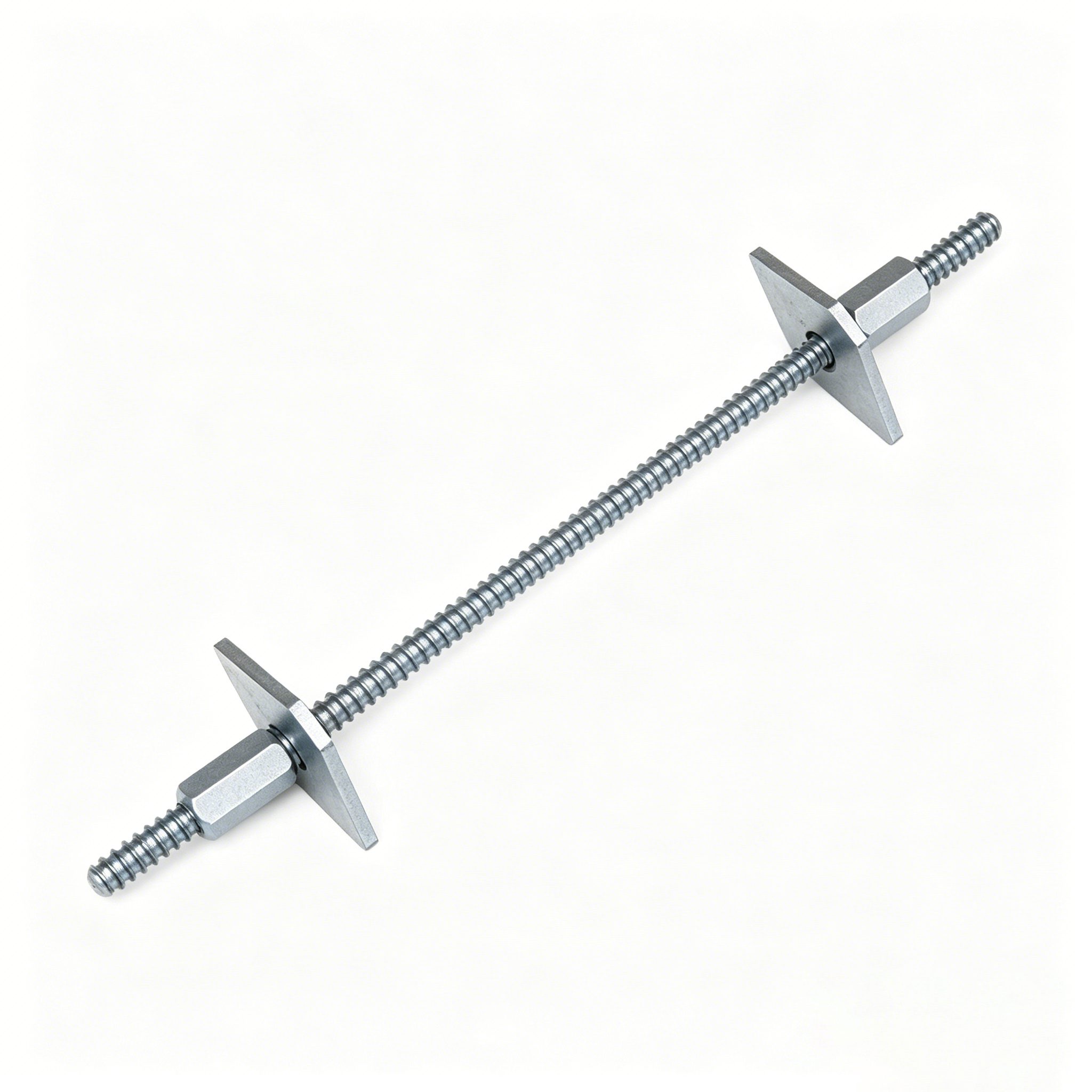
Detail view of the tie rod assembly, highlighting the high-strength threaded rod, square bearing plates, and precision-machined nuts. The image emphasizes material quality, machining accuracy, and load-transfer functionality, demonstrating reliable force distribution and secure formwork tightening in the tie rod aluminum formwork system.
-
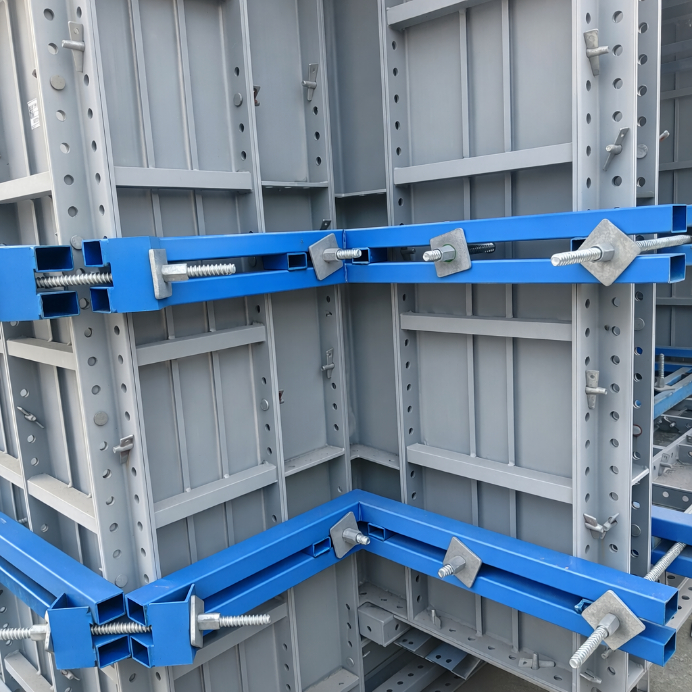
Close-up view of the tie-rod aluminum formwork system in operation, showing tie rods passing through the panels and locking onto steel walers to resist concrete lateral pressure. The image clearly demonstrates how tensile force is transferred from the formwork panels to the walers, forming a rigid and stable assembly that ensures accurate wall thickness, controlled deformation, and safe concrete pouring.
-
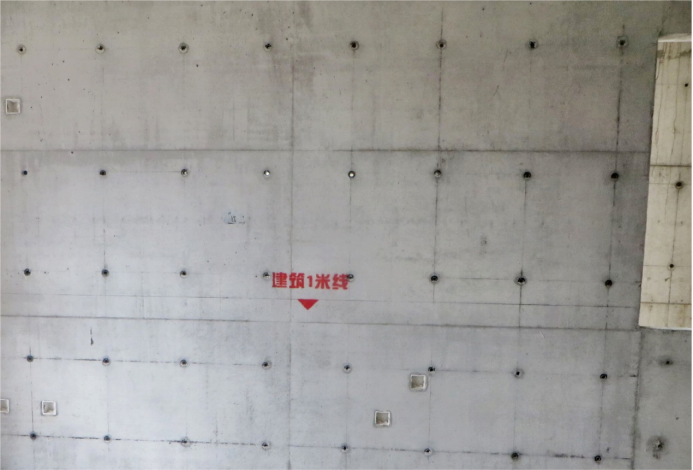
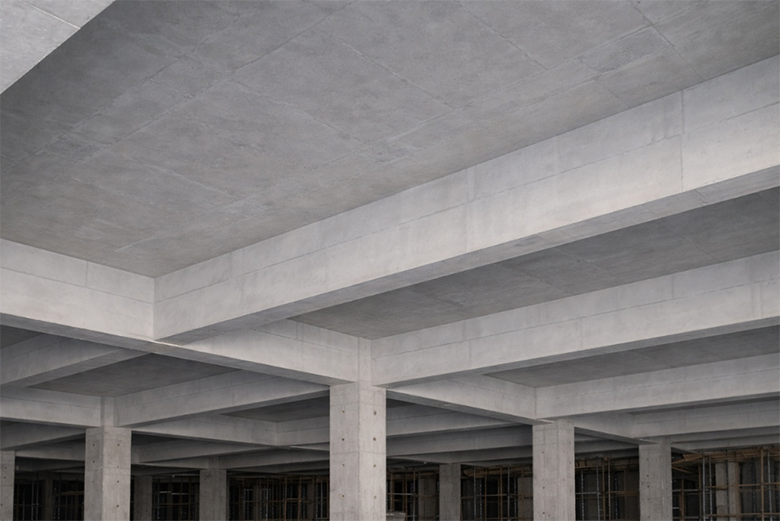
Finished concrete surface formed using a tie-rod aluminum formwork system, showing uniformly distributed tie-rod holes with consistent spacing. The precise hole alignment reflects controlled wall thickness, stable formwork bracing, and reliable resistance to concrete lateral pressure, while allowing standardized post-pour sealing for structural integrity and waterproofing.
-
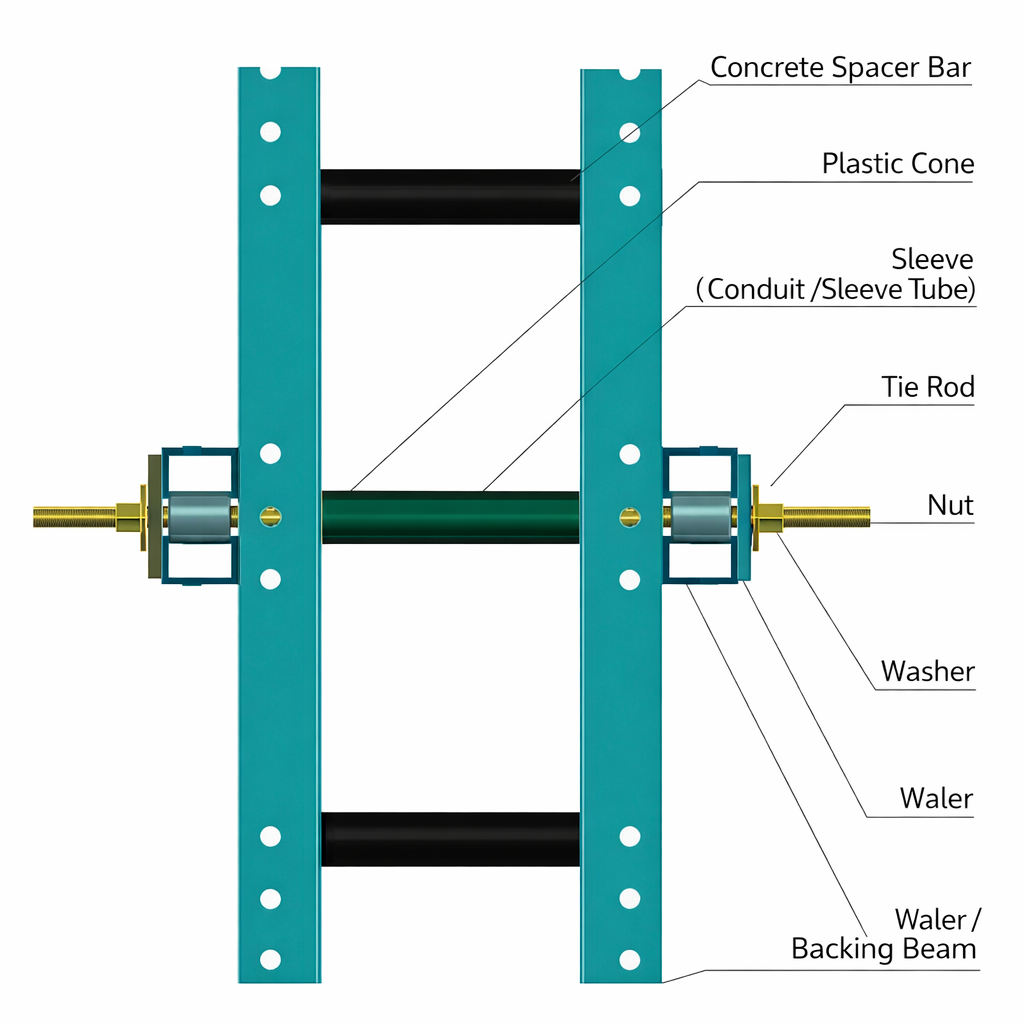
The diagram illustrates a tie-rod formwork assembly used to resist concrete lateral pressure and control wall thickness during pouring. A threaded steel tie rod passes through a sleeve between two opposing formwork panels, while plastic cones define the concrete face and prevent bonding to the rod. Nuts and washers transfer tensile force to the walers (backing beams), which distribute loads across the panels, ensuring alignment, dimensional accuracy, and stable formwork during concreting.