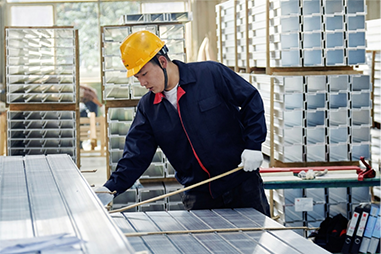
The flat-tie aluminum formwork system is a high-precision reinforcement solution designed for shear wall concrete structures, commonly used in residential and high-rise buildings. The system replaces traditional through-wall tie rods with high-strength flat ties, enabling hole-free external walls, precise wall thickness control, and high construction efficiency.
The system consists of 6061-T6 aluminum formwork panels with integrated flat-tie slots, high-strength 50Mn steel flat ties (tensile strength ≥ 800 MPa), lightweight single box walers, and standardized connectors fixed by pins. Flat ties are inserted into the panel slots on both sides of the wall and resist fresh concrete lateral pressure by maintaining fixed panel spacing. After concrete pouring, the formwork panels and walers are removed, and the exposed flat-tie ends are snapped off, leaving no through-wall penetration.
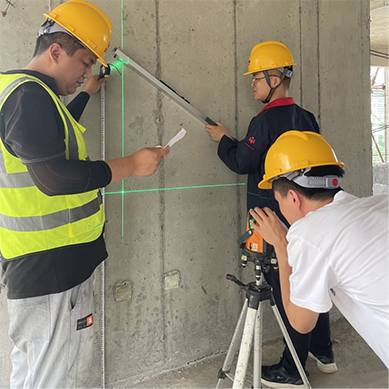
This load-transfer mechanism delivers stable forming quality, with wall thickness deviation controlled within ≤ 2 mm and verticality/flatness within ≤ 4 mm, meeting plaster-free or thin-plaster finish requirements. Compared with tie-rod systems, the flat-tie system uses significantly less steel and improves installation and stripping efficiency by approximately 40%. Aluminum panels achieve 200–300 reuse cycles, resulting in low lifecycle cost and consistent performance.
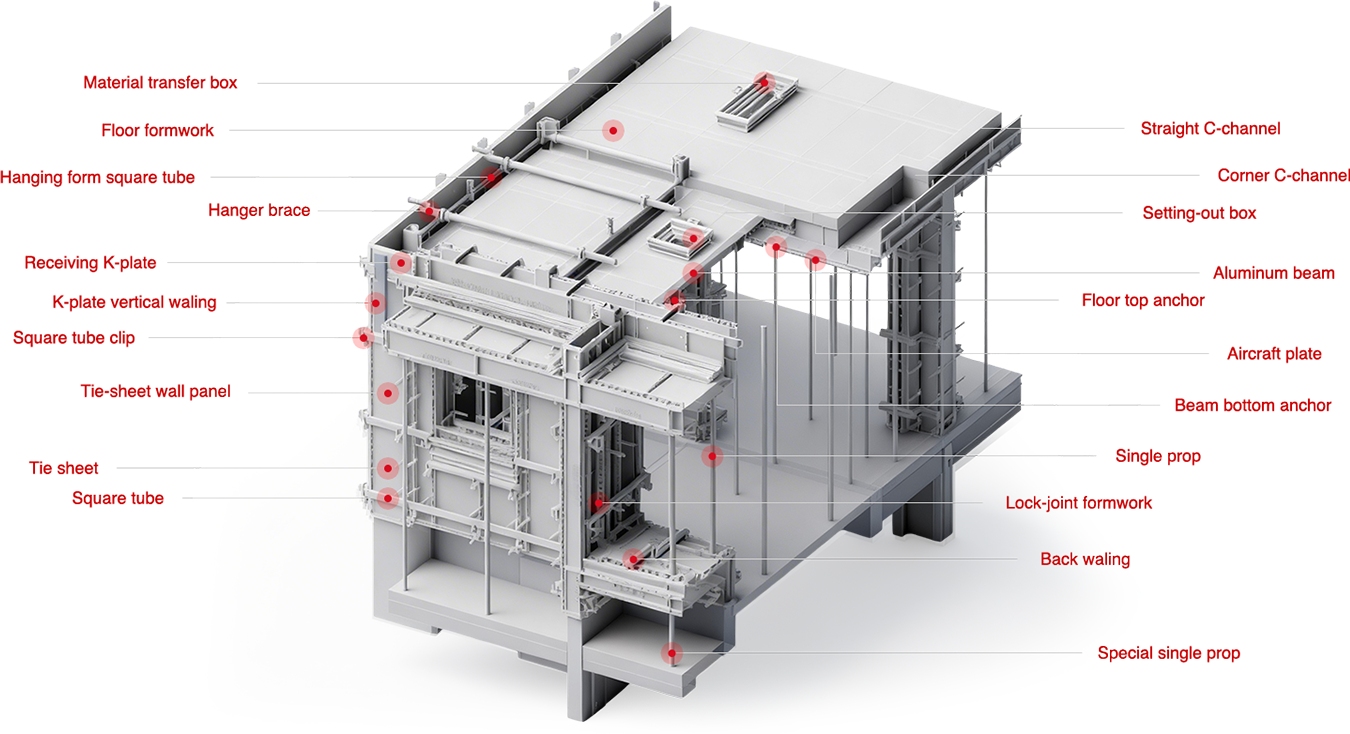
-
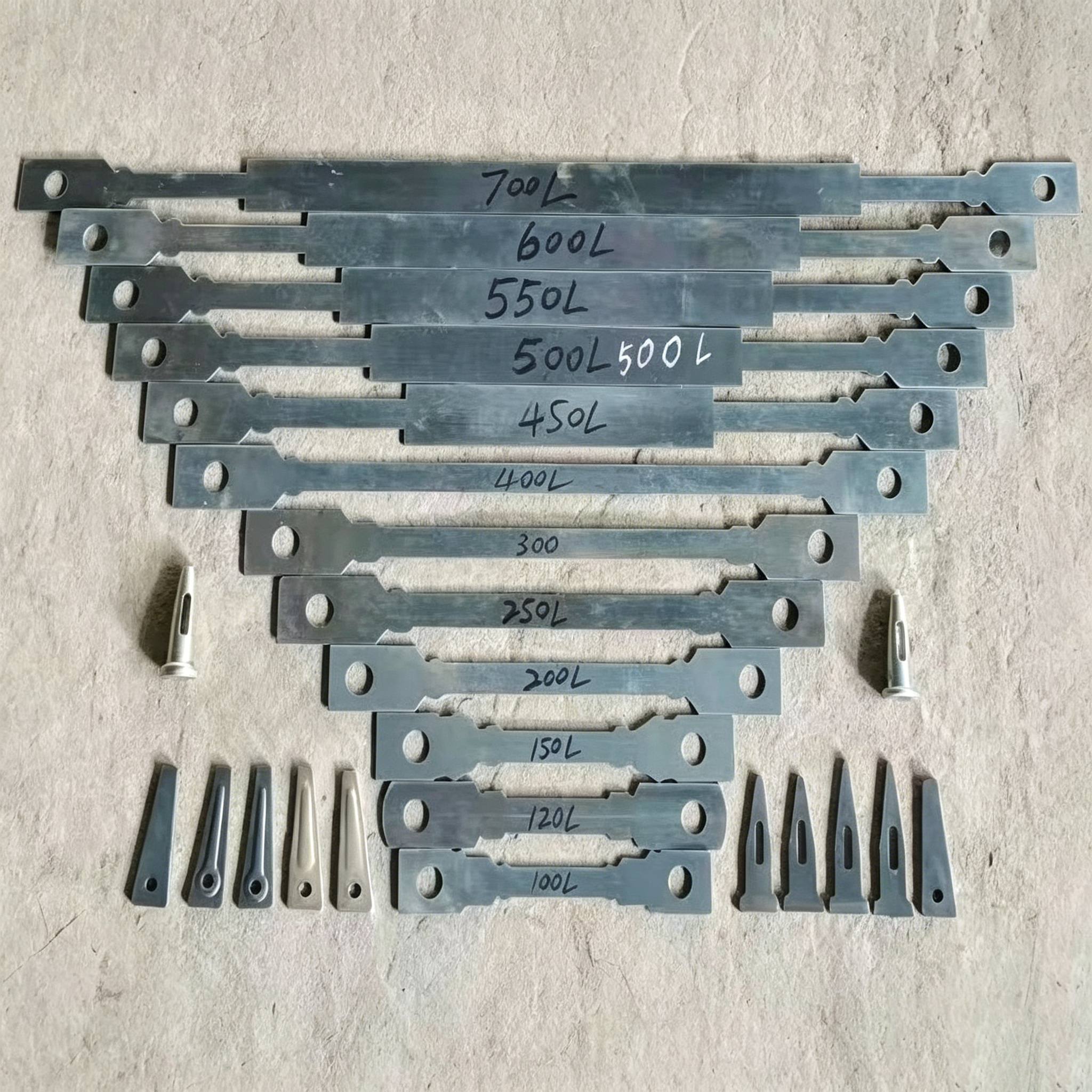
Flat ties available in multiple standardized lengths to match different wall thicknesses and structural requirements, enabling precise spacing control, consistent concrete geometry, and optimized material use across varied project conditions.
-
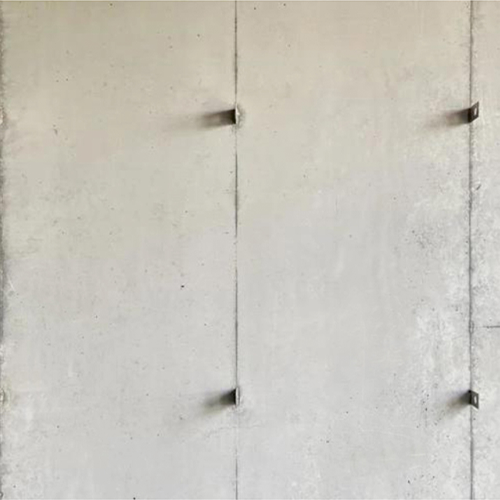
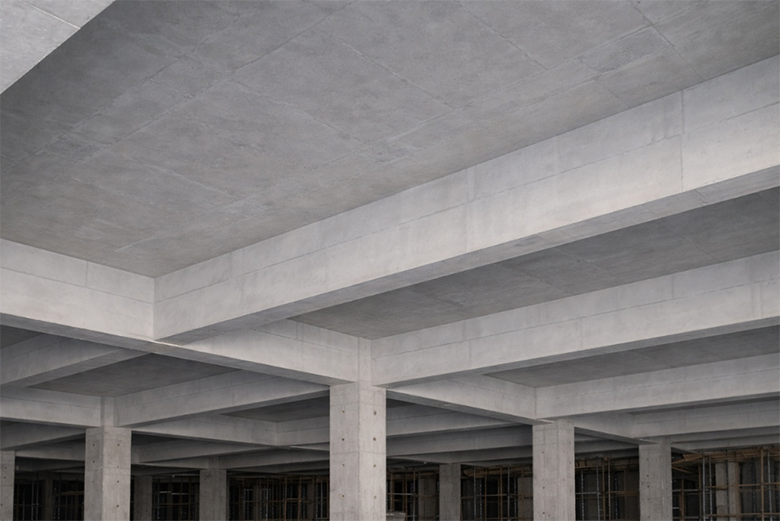
This picture shows the finished concrete surface formed by the flat tie aluminum formwork system. The absence of through-wall tie holes ensures a clean, uniform finish, eliminates post-pour hole patching, and significantly reduces long-term leakage risk while maintaining precise wall thickness and alignment.
-
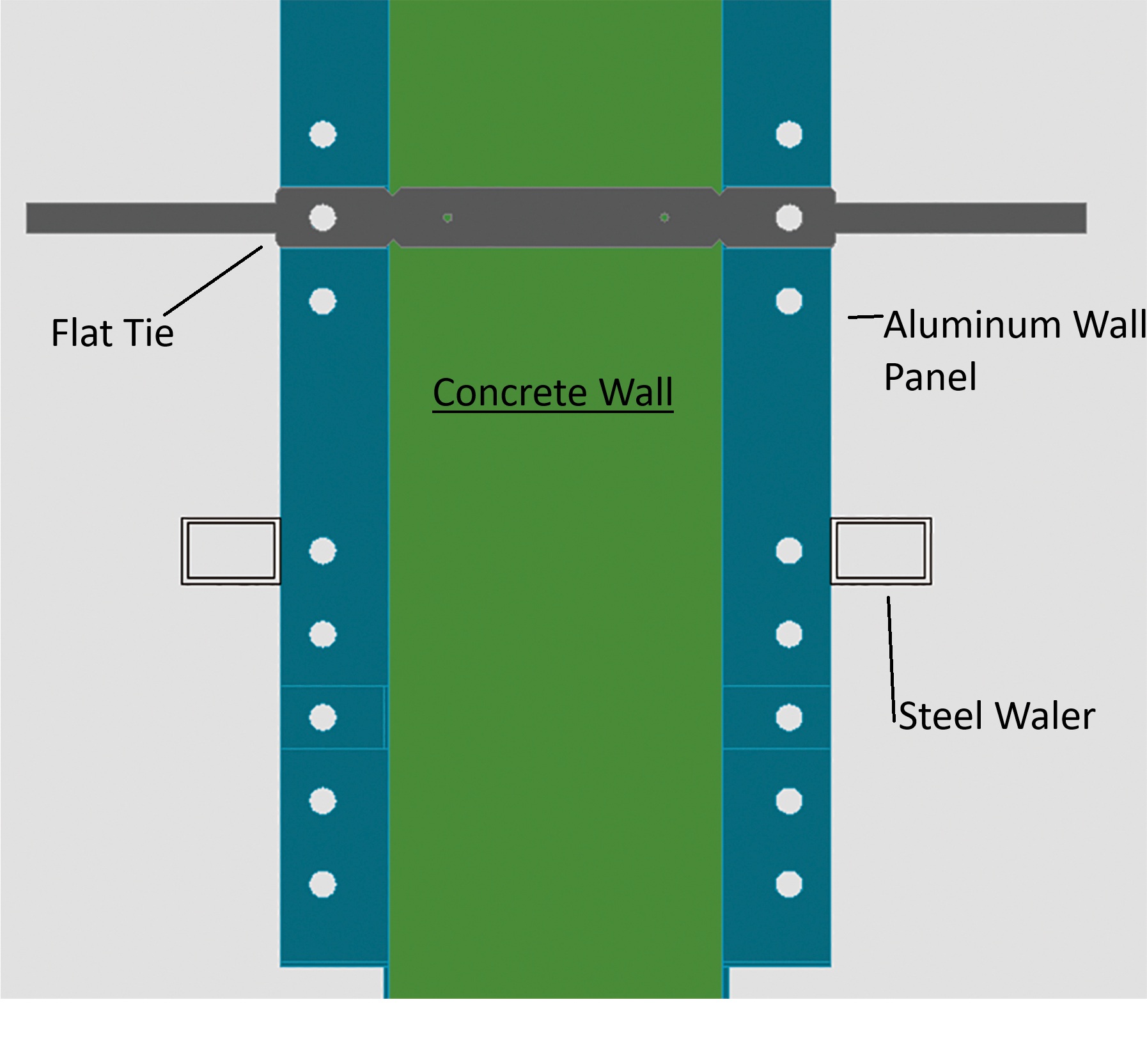
The image illustrates a cross-section of an aluminum flat-tie wall formwork system. The blue elements on both sides represent the aluminum wall panels that form the concrete surface. The green core in the center is the poured concrete wall. The grey horizontal strip passing through the wall panels is the flat tie, which controls wall thickness and resists concrete lateral pressure during pouring. The grey rectangular blocks positioned outside the wall panels on both sides are the walers, which distribute load from the flat tie and transfer forces to the supporting system. Together, these components form a simple, hole-free reinforcement mechanism that ensures dimensional accuracy, structural stability, and clean concrete finishes.